What is upset forging and how does it differ from other forging processes?
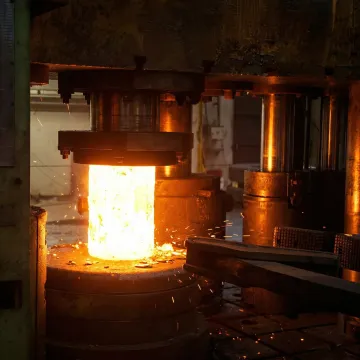
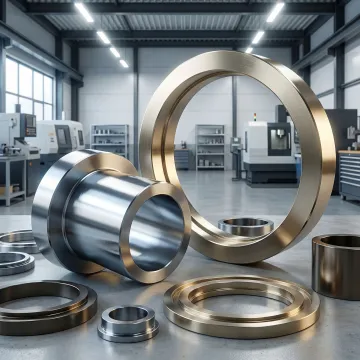
Upset forging is a process that increases the cross-sectional area of a workpiece by compressing its length, typically along the axis. Unlike closed die forging, which encloses the material in a cavity to create complex shapes, upset forging is commonly used to produce rings, cylinders, flanges, and heads with uniform grain flow and superior mechanical properties compared to machined bar stock.
What materials are available for upset forgings at MTS Forge?
MTS Forge produces upset forgings, rings, and cylinders in nearly all grades available in the market. This includes alloy steels, stainless steels, high-performance alloys such as Monel K-500, and duplex stainless steels. Our metallurgical expertise allows us to recommend the most suitable material grade for your application's mechanical and environmental requirements.
What are the maximum size and weight capacities for upset forgings?
MTS Forge can produce upset forgings, rings, and cylinders up to a maximum forging diameter of 26 inches. The maximum weight capacity per piece is 1,500 pounds. These dimensions cover a wide range of industrial, aerospace, defense, and power generation component requirements. Contact us to confirm whether your specific part falls within our production range.
Which industries do you serve with upset forging services?
MTS Forge serves customers across Aerospace, Defense, Power Generation, Machine Manufacturing, Agriculture, Medical, Construction, and Gas & Petroleum industries. A significant portion of our work involves highly regulated sectors such as commercial nuclear and military defense, where our quality certifications and traceability programs are mandatory procurement requirements.
Does MTS Forge offer heat treatment for upset forgings?
Yes. MTS Forge performs in-house normalizing heat treatment at our Coatesville, PA facility. Normalizing refines the grain structure created during the forging process, relieves internal stresses, and improves tensile strength, toughness, ductility, and machinability. This is the most commonly specified post-forging heat treatment and is available across all materials we work with.
Can MTS Forge perform rough machining on upset forgings?
Yes. In-house rough machining is available immediately following the forging process. We remove excess material, forging flash, and surface irregularities to bring components to near-net shape. This eliminates the need for customers to source a separate machining vendor, reducing lead times, handling risk, and overall cost for downstream processing or direct application.
What quality certifications does MTS Forge hold?
MTS Forge is certified to Mil I 45208, NCA 3800, and Mil Q9858. These certifications support complete traceability throughout the production process and ensure compliance with stringent military, nuclear, and industrial quality standards. Our Quality Assurance Program is designed to meet the requirements of aerospace, defense, and commercial nuclear procurement teams.
Where is MTS Forge located and what areas do you serve?
MTS Forge is headquartered at 151 Greenbelt Dr, Coatesville, PA 19320. We primarily serve manufacturers and procurement teams in Pennsylvania, Iowa, Kentucky, and Texas, but supply forged components to customers across the United States. Our made-in-America manufacturing supports domestic supply chains for critical defense, aerospace, and industrial applications.