What is the process of normalizing heat treatment?
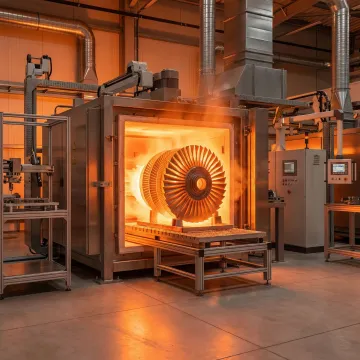
Normalizing involves heating a forged component above its upper critical temperature until its grain structure fully homogenizes, then allowing it to cool at room temperature in still air. This controlled cycle breaks up coarse, uneven grain formations produced during hot forging, creating a refined, uniform microstructure with improved tensile strength, enhanced toughness, relieved internal stresses, and better machinability throughout the part.
What is the heat treatment process in aviation?
Aviation heat treatment encompasses a range of thermal processes — including normalizing, annealing, and stress relieving — applied to forged metal components to achieve precise mechanical properties required for flight-critical applications. Normalizing is the most commonly specified treatment for hot forgings, ensuring microstructural uniformity and consistent performance across materials such as alloy steels, stainless steels, and high-performance alloys used in aerospace structures.
Why is normalizing the most common heat treatment for hot forgings?
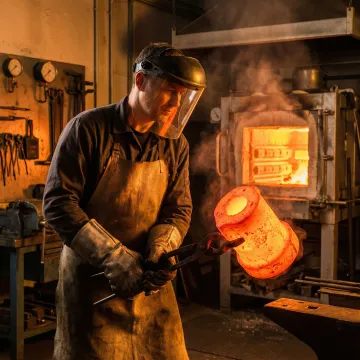
Hot forging inherently creates uneven grain growth and internal stresses as metal is shaped under high pressure and heat. Normalizing directly addresses these byproducts by resetting the microstructure through a heating and air-cooling cycle. The result is consistent mechanical properties throughout the component — making it the industry's standard choice for forged parts destined for aerospace, defense, and power generation applications.
What materials does MTS Forge normalize?
MTS Forge applies normalizing heat treatment across its full range of materials, including alloy steels, stainless steels such as 316-L, and high-performance alloys including Monel K-500 and Ferralium 255. This broad material capability supports customers across aerospace, defense, commercial nuclear, chemical processing, and power generation sectors where material-specific thermal processing is a standard procurement requirement.
Is the normalizing process performed in-house at MTS Forge?
Yes. MTS Forge performs normalizing entirely in-house at its Coatesville, PA facility. This integrated capability means forged components can proceed directly from the forging press to the furnace without leaving the facility, reducing handling risk, eliminating third-party vendor lead times, and maintaining complete chain-of-custody traceability required by aerospace and defense quality standards.
What quality standards govern MTS Forge's heat treatment operations?
MTS Forge's Quality Assurance Program is certified to Mil I 45208, NCA 3800, and Mil Q9858 — military and commercial nuclear standards requiring rigorous process documentation, inspection protocols, and full material traceability. Every normalized component leaves the facility with comprehensive heat treatment records, ensuring compliance with the strictest aerospace and defense procurement specifications.
How does normalizing improve machinability of forged components?
The uniform, refined grain structure produced by normalizing reduces the hardness variations and stress concentrations that make as-forged components difficult to machine consistently. By homogenizing the microstructure, normalizing creates a more predictable, stable material condition that responds uniformly to cutting tools — reducing tool wear, improving surface finish quality, and shortening cycle times in subsequent machining operations.
Which industries require normalized forgings from MTS Forge?
MTS Forge supplies normalized forgings primarily to aerospace, defense, commercial nuclear, chemical processing, and power generation customers — industries where microstructural uniformity and documented mechanical reliability are mandatory procurement requirements. The company's Coatesville, PA facility also serves manufacturers and procurement teams in Pennsylvania, Iowa, Kentucky, and Texas across broader industrial applications.