What is the heat treatment of Inconel 600?
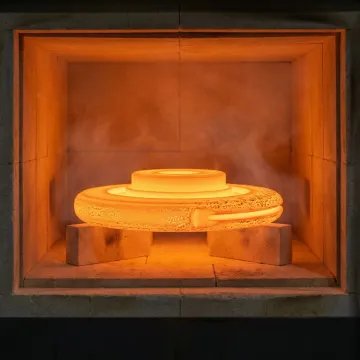
Inconel 600 is typically heat treated through annealing rather than precipitation hardening, as it is a solid-solution-strengthened alloy. The standard anneal involves heating to approximately 1700°F–2000°F (927°C–1093°C) followed by rapid cooling or air cooling. For forged components, normalizing — heating above the upper critical temperature and cooling in still air — is commonly applied to relieve forging stresses and refine grain structure, producing a uniform microstructure with consistent mechanical properties throughout the part.
What is the maximum temperature for Inconel 600?
Inconel 600 is rated for continuous service up to approximately 2000°F (1093°C) in oxidizing atmospheres and up to 2100°F (1149°C) in reducing or neutral atmospheres. Its high nickel content provides exceptional oxidation resistance and structural stability at elevated temperatures, making it a preferred material for furnace components, heat exchangers, and aerospace applications where prolonged exposure to extreme thermal environments is required.
What is the difference between annealing and normalizing for Inconel 600 forgings?
Annealing involves heating Inconel 600 to a specific temperature range (typically 1700°F–2000°F) followed by controlled or rapid cooling to dissolve any precipitates and maximize ductility. Normalizing, the most commonly specified process for hot forgings, heats the component above its upper critical temperature and allows it to air cool, refining irregular grain structures created during the forging process and producing more uniform tensile strength and toughness throughout the component.
Why does Inconel 600 require heat treatment after forging?
The hot forging process induces uneven grain growth and internal residual stresses across a component as different sections cool and deform at different rates. Without post-forge heat treatment, these inconsistencies create variable mechanical properties within the same part — a serious concern for aerospace, nuclear, and defense applications. Normalizing breaks up irregular grain structures and produces a refined, homogeneous microstructure with consistent tensile strength, ductility, and toughness verified by material testing.
What mechanical properties does Inconel 600 achieve after heat treatment?
After proper annealing or normalizing, Inconel 600 typically achieves an ultimate tensile strength of approximately 80–100 ksi (550–690 MPa), a yield strength of 25–45 ksi (170–310 MPa), and elongation values of 35–45%. The heat treatment process relieves forging stresses, refines grain structure, and maximizes ductility and toughness — properties that are verified through mechanical testing and certified material test reports (MTRs) before components are released for demanding applications.
What industries use heat-treated Inconel 600 forgings?
Heat-treated Inconel 600 forgings are used across aerospace (jet engine components, exhaust systems), defense (high-temperature structural parts), commercial nuclear (reactor internals, heat exchanger components), power generation (turbine hardware), and chemical processing (reactor vessels, piping components). Its combination of high-temperature strength, oxidation resistance, and corrosion resistance in both acidic and alkaline environments makes it a material of choice wherever extreme service conditions are present.
Does MTS Forge perform heat treatment in-house, and what certifications apply?
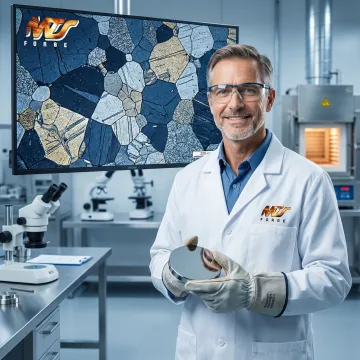
Yes. MTS Forge performs normalizing heat treatment entirely in-house at its Coatesville, PA facility, maintaining full process control without subcontracting. The heat treatment operations are conducted under MTS Forge's certified quality assurance programs, which include Mil I 45208, NCA 3800, and Mil Q9858. These programs ensure complete traceability of material, process parameters, and test results — a mandatory requirement for aerospace, defense, and commercial nuclear procurement.
What documentation and traceability is provided with heat-treated Inconel 600 forgings?
MTS Forge provides comprehensive documentation with every heat-treated forging, including certified material test reports (MTRs) confirming chemical composition and mechanical properties, heat treatment records documenting temperature, time, and cooling method, dimensional inspection reports, and non-destructive examination results where specified. All documentation is maintained under the company's Quality Assurance Program — Mil I 45208, NCA 3800, and Mil Q9858 — ensuring full traceability from raw material heat to finished forged component.