What is the difference between billet and forged aluminum block?
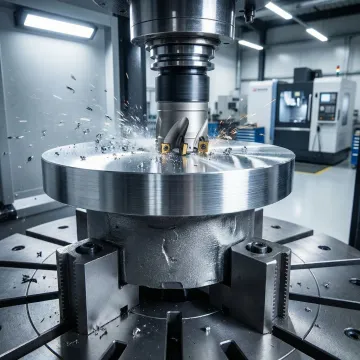
A billet aluminum block is machined directly from a solid bar or slab of aluminum, while a forged aluminum block is shaped under high pressure in a die. Forging aligns the grain structure of the metal to the part's geometry, resulting in superior strength, fatigue resistance, and structural integrity compared to billet. Forged blocks also typically require less raw material, reducing overall per-unit costs.
What industries does MTS Forge serve with CNC aluminum block forgings?
MTS Forge supplies custom CNC aluminum block forgings to aerospace, defense, power generation, commercial nuclear, machine manufacturing, agriculture, medical, construction, and gas and petroleum industries. Our quality assurance programs and traceability documentation are specifically structured to meet the procurement requirements of these highly regulated sectors.
What certifications does MTS Forge hold for aluminum block forging production?
MTS Forge operates under a comprehensive Quality Assurance Program certified to Mil I 45208, NCA 3800, and Mil Q9858. These certifications ensure that every custom aluminum block forging is produced, inspected, and documented to military, nuclear, and aerospace-grade standards, with full material traceability from raw stock to finished component.
What is the maximum size and weight for aluminum block forgings at MTS Forge?
For upset forgings and cylindrical components, MTS Forge can produce parts up to 26 inches in diameter and up to 1,500 pounds per piece. For custom and closed die forgings, capabilities vary depending on geometry and tooling configuration. Contact our engineering team with your specific dimensional requirements to confirm feasibility for your aluminum block application.
Does MTS Forge offer in-house machining for aluminum block forgings?
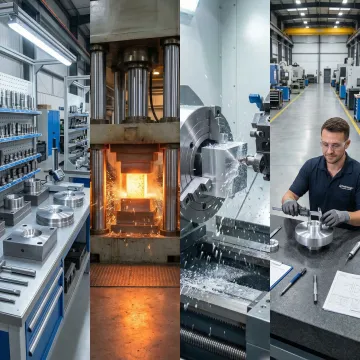
Yes. MTS Forge offers in-house rough machining services applied directly after the forging process. This removes forging flash, surface irregularities, and excess material to bring aluminum block components close to their near-net shape. In-house machining reduces lead times, eliminates the risk of handling your parts at a third-party vendor, and lowers overall production costs.
What is closed die forging and why is it cost-effective for aluminum blocks?
Closed die forging uses custom-shaped dies to press aluminum into precise geometries, producing near-net-shape components with minimal excess material. This process significantly reduces the amount of expensive aluminum starting stock required and cuts downstream machining time, resulting in lower unit costs compared to machining an aluminum block from raw bar stock.
Does MTS Forge perform heat treatment on aluminum block forgings?
Yes. MTS Forge performs normalizing heat treatment in-house at our Coatesville, PA facility. This process heats forged components above their upper critical temperature and allows controlled cooling to break up irregular grain structures caused by the forging process. The result is a uniform microstructure with improved tensile strength, enhanced toughness, reduced internal stresses, and better machinability.
How long has MTS Forge been producing custom forgings?
MTS Forge was founded in 1986 by Stephen Carr and Edward Waddell, giving us nearly 40 years of experience in the forging industry. Over that period, we have continuously invested in advanced technology and workforce development to expand our capabilities, serving some of the most demanding applications in aerospace, defense, nuclear, and industrial manufacturing.