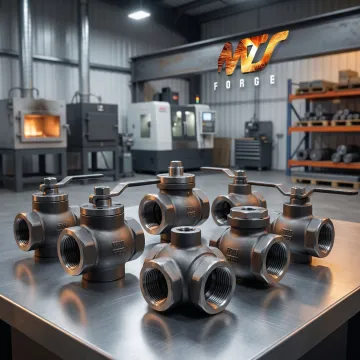
What are forged steel valves?
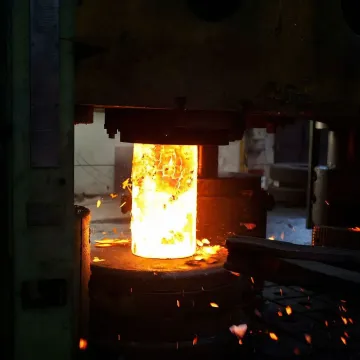
Forged steel valves are valve bodies and components manufactured through a forging process, where heated steel billets are shaped under high compressive pressure using dies. This process creates a refined, directional grain structure that gives the material superior strength, pressure integrity, and fatigue resistance compared to cast or machined-from-bar alternatives — making forged valves the preferred choice for high-pressure and high-temperature pipeline and process applications.
What is a forged gate valve?
A forged gate valve is a gate valve whose body is manufactured via forging rather than casting. The forging process produces a denser, more uniform grain structure, resulting in a valve body with higher tensile strength and better resistance to pressure surges and thermal cycling. Forged gate valves are commonly specified in ASME Class 800, 1500, and 2500 pressure ratings for demanding oil, gas, power, and chemical service applications.
What carbon steel grades are used for forged valve bodies?
Common carbon steel grades for forged valve bodies include ASTM A105 for ambient-to-moderate temperature service, A350 LF2 for low-temperature applications, and A182 F1 and F11 for elevated-temperature service. The appropriate grade depends on the valve's pressure class, operating temperature range, and the applicable piping code — ASME B16.34 being the primary standard governing forged steel valves.
What is the difference between forged and cast steel valves?
Forged valves are shaped under compressive force, producing a tight, aligned grain structure with higher strength, better impact resistance, and fewer internal defects than cast valves. Cast valves are made by pouring molten metal into molds, which can introduce porosity and non-uniform grain structures. Forged valves are generally preferred for smaller sizes and higher pressure classes, while cast valves are more economical for larger diameter, lower-pressure applications.
What industries use forged carbon steel valves?
Forged carbon steel valves are widely used in oil and gas (upstream, midstream, and downstream), power generation, commercial nuclear, petrochemical processing, aerospace hydraulic systems, defense, and water treatment. Any application involving high pressures, elevated temperatures, or critical isolation duties benefits from the structural integrity that forged carbon steel construction provides over cast alternatives.
What quality standards apply to forged carbon steel valve manufacturing?
Forged carbon steel valves are typically manufactured to standards including ASTM A105 and A350 for material, ASME B16.34 for design and pressure ratings, and API 602 for compact forged steel gate, globe, and check valves. MTS Forge maintains a Quality Assurance Program certified to Mil I 45208, NCA 3800, and Mil Q9858, ensuring full material traceability and dimensional conformance on every forged valve component we produce.
What lead times should I expect for forged carbon steel valve components?
Lead times for forged carbon steel valve components vary based on geometry complexity, material grade, order volume, and required certifications. Simple, standard-geometry components from existing tooling can often be turned around in a matter of weeks. Complex or custom geometries requiring new die development may require additional time for tooling design and validation. Contact MTS Forge directly with your drawings and specifications for an accurate lead time estimate.
Can MTS Forge produce forged carbon steel valves to custom specifications?
Yes. MTS Forge specializes in custom forgings produced to exact customer drawings and specifications. Our in-house tooling design team can develop new dies for unique valve geometries, and our large existing tooling inventory may already accommodate standard configurations. We work with customers from material selection through rough machining to deliver valve forgings that are ready for finish machining or direct application in demanding service environments.